Conservative Tooth-Preserving Dentistry, TMJ & Orthodontics in Gangnam, Seoul
5.0 Verified Patient Satisfaction
en-US


Dental Clinical Guide
TMJ and Sleep Problems: How Jaw Pain Affects Your Rest and What You Can Do
Struggling with TMJ and sleep issues? Learn how jaw pain affects your rest and discover effective treatments for better sleep and relief. Take action today!
Schedule a ConsultationHow Jaw Pain from the Temporomandibular Disorder (TMD) Can Disrupt Your Sleep
If you’ve been waking up tired or with a sore jaw, you’re not imagining things. At OnO Dental Clinic we frequently see patients whose poor sleep and jaw-joint problems are intertwined. Let’s walk through why this happens, what the connection is, and how you can address it — gently, with precision, and without unnecessary procedures.
Why your jaw pain might be wrecking your rest
1. The jaw joint is more connected to sleep than you’d think
The joint in question — the temporomandibular joint (TMJ) — isn’t just about chewing. It is surrounded by muscles, ligaments, and nerves, all of which stay active when you have dysfunction. When the joint or the surrounding muscles are irritated or overloaded:
- You're more likely to clench or grind your teeth at night (sleep bruxism).
- Your jaw may hold tension → more pain, stiffness, difficulty relaxing.
In fact, patients with TMD often report significantly worse sleep quality. It’s not just “jaw pain = bad sleep” in a simple linear way. Rather, the jaw problem can lead to disrupted sleep patterns, and conversely poor sleep can worsen the jaw pain. It’s a vicious loop.
2. Pain, arousals and sleep architecture
When the TMJ or masticatory muscles ache or are strained, two things often happen during sleep:
- Micro-awakenings: Your brain briefly wakes up from deeper sleep when muscles tighten, pain spikes, or your bite shifts.
- Increased sensitivity to pain: Poor sleep lowers your pain threshold, so what might have been minor jaw discomfort starts disrupting sleep more.
3. Associated behaviours: grinding, clenching and airway issues
TMD doesn’t come alone. For example:
- Sleep bruxism (nighttime grinding) is strongly correlated with TMD and poor sleep.
- Some patients with TMJ issues also experience snoring or mild airway collapse, which further fragments sleep.
- Psychological stress, muscle tension, and jaw-locking behaviour all feed into less restful sleep.
Think of your jaw like the hinge of a door that not only swings, but sometimes clicks, grinds, or resists. If that hinge is out of alignment or overloaded, the whole door (your sleep system) gets noisy.
Why this matters for you
- Daytime fatigue and brain-fog: Even if you clock 7–8 hours, sleep that’s fragmented by jaw pain or bruxism doesn’t give the restoration your body needs.
- Worsened jaw symptoms: Poor sleep and grinding worsen the joint/muscle condition, making next-day pain stronger.
- Impact on other systems: Since TMD and sleep issues share pathways with pain modulation and even mood, untreated jaw–sleep problems can ripple into headaches, neck pain, and emotional changes.
At OnO Dental Clinic we often hear: “I sleep fine — but in the morning my jaw hurts, I’m exhausted, and I can’t figure out why.” The truth is: your jaw may have been quietly disrupting your sleep cycles.
What you can do: A nuanced, conservative roadmap
Here we speak to you as a realistic patient — one who wants effective results without major extraction or invasive surgery. Guided by our philosophy at OnO (preserve natural teeth, minimally invasive, diagnostics first), you can take concrete steps.
Step A: Recognise the signals
- Waking with jaw tension, ear-ache, or headache.
- Partner reports of teeth-grinding noise.
- Clicking or locking of the jaw when opening/closing.
- Unexplained daytime fatigue despite sufficient sleep time.
Step B: Have a proper functional evaluation
At our clinic we utilise advanced diagnostics: 3D CT imaging, joint scans and bite analysis. Why? Because you might have underlying factors like:
- Disc displacement inside the TMJ.
- Imbalance of the bite (occlusion) causing uneven load.
- Muscle hyperactivity or “silent” grinding during sleep. Without checking these, simply prescribing a nightguard may treat symptoms but not the root cause.
Step C: Adopt sleep-friendly jaw habits
Many people don’t realise that your jaw uses the same “rest-repair” window during sleep as your body muscles. So:
- Avoid late-night stimulation of the jaw: hard foods, gum chewing, excessive talking.
- Try relaxation of the jaw before bed: gentle stretching, masseter massage, warm compress.
- Ensure your sleeping position supports jaw alignment (side or back sleeping with adequate neck support).
- If you clench during the day, bring awareness: your teeth should only touch when chewing or swallowing.
Step D: Night-time appliance or guard — but tailored
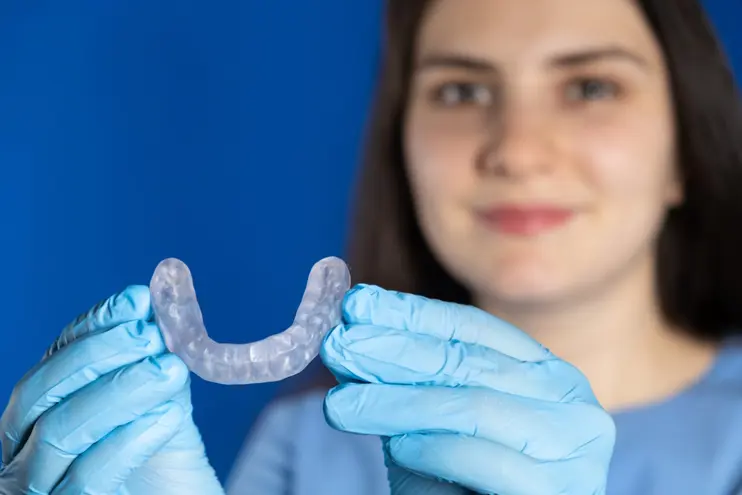
A well-fitted stabilization splint or occlusal device can protect teeth and reduce muscle load. But caution: it must be adjusted properly — a poor fit may worsen jaw load. At a conservative clinic like ours, the guard is one piece of the puzzle, not the entire solution.
Step E: Integrate treatment of sleep and jaw together
- If you have snoring or suspected sleep-breathing disorder: combine dental/TMJ care with a sleep-medicine evaluation.
- If you grind, a night-time appliance plus jaw muscle relaxation and bite correction may improve both pain and sleep.
Step F: Follow-through and monitoring
We’ve found that patients who actively track their jaw symptoms and their sleep quality (e.g., how refreshed they feel, how many micro-awakenings they suspect) show better outcomes. At OnO Dental Clinic, we monitor progress over a few months, adjust treatment, and aim to preserve your natural teeth and support jaw/joint health long-term.
Why non-extraction orthodontics, careful bite and TMJ care matter
In the world of orthodontics and jaw-joint care, extraction (removing teeth) is sometimes presented as the fastest solution. But at OnO we believe in long-term harmony:
- Removing teeth may shift bite forces, which can stress the TMJ and muscles.
- A misaligned bite may lead to asymmetric muscle load and night-time clenching.
- Preserving natural teeth while aligning the bite gently supports both function and comfort.
If you’ve been told “you must extract to fix your bite” and you also have jaw pain or sleep issues — think again. A precision, non-extraction-first philosophy often yields better results for jaw health and restful sleep.
Example patient story (anonymised)
A 38-year-old professional woman came to us complaining of morning jaw ache, fatigue, and clenching at night. She had been told she needed two teeth extracted for orthodontics, but her jaw pain worsened. At our clinic we evaluated her TMJ, found a mild disc displacement and a bite misalignment causing muscle overload at night. We fitted a custom night-guard, adjusted her bite (without extractions), and taught pre-bed jaw relaxation routines. Within 8 weeks she reported: “I no longer wake up with a locked jaw, I feel rested, and the clicking is nearly gone.” Her sleep-quality improved significantly.
When to seek a specialist
- If your jaw locks, opens with a pop or can’t close properly.
- If you wake up gasping, snoring heavily, or your partner reports stop-breathing episodes.
- If you’ve tried guards, relaxation, sleep hygiene and still wake unrefreshed.
A precision TMJ clinic like ours in Gangnam, Seoul, is suited for complex cases: we combine orthodontics, implant care, TMJ expertise under one roof.
In short: the jaw isn’t a “bite only” problem. It intersects with your sleep, your muscle tone, your pain pathways and your overall recovery each night. If you’re experiencing jaw pain, clenching, or unexplained fatigue, don’t accept that “you’ll just get used to it.”
If your nightly rest is being undermined by jaw discomfort, a TMJ evaluation by a clinic committed to preservation over removal, to non-invasive diagnostics, and to long-term dental and sleep health — such as ours — may be the turning point you’ve been looking for.
More Dental Articles
Continue reading clinical dental guides from OnO Dental Clinic.
What Are the Advantages of Choosing Zirconia Crowns Over Metal Crowns?
Explore the advantages of zirconia crowns over metal—superior aesthetics, durability, and biocompatibility for a natural, long-lasting smile. Learn more now!
Read Article

How Stress Affects TMJ and What You Can Do About It
Discover how stress impacts TMJ and learn effective strategies to relieve jaw pain, tension, and discomfort for lasting relief. Take control of your TMJ today!
Read Article
Is There a Link Between TMJ and Posture? How to Improve Both
Discover the connection between TMJ and posture—how alignment affects jaw health and simple ways to improve both for long-term relief. Find out more today!
Read Article